
Community
Some Wisconsin monarchs have made it to Mexico months after being tagged months ago
By Katherine Langford
Advertisement · Why this ad?
Marcus manages the day-to-day editorial workflow across all brands, coordinating coverage assignments and ensuring editorial standards are met. He previously served as city editor at the Pioneer Press and holds a degree in Political Science from Carleton College.
More from Marcus →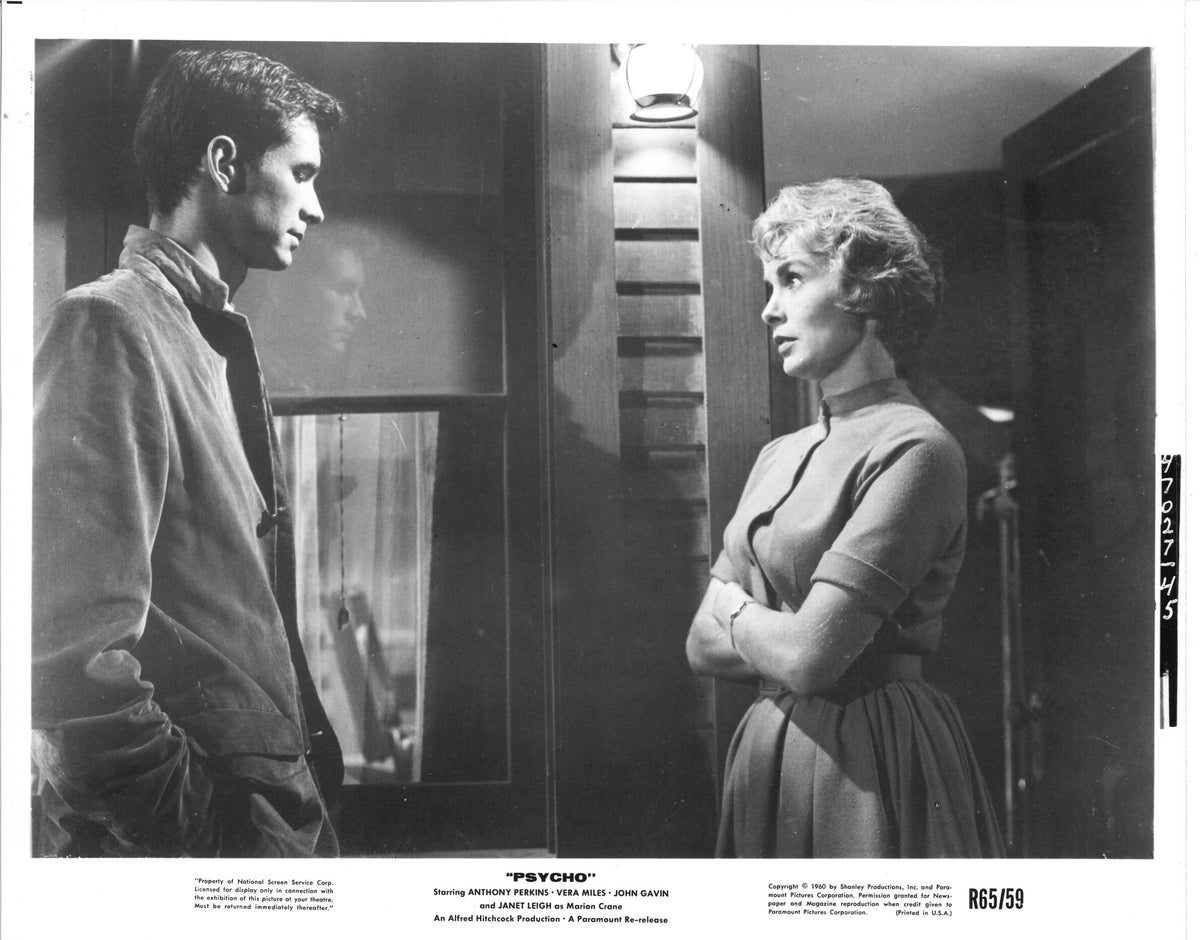
Robert Bloch’s name conjured images of chilling suspense and psychological dread for me. I knew him as the author of “Psycho,” the novel that spawned Alfred Hitchcock’s iconic film, and I’d dipped into some of his other horror stories. But it wasn’t until recently that I learned a significant part of Bloch’s story unfolded right here in Wisconsin. The celebrated author of horror, fantasy, and science fiction, including memorable episodes for the original *Star Trek* series, spent a considerable portion of his life living and working within our state, and the landscape and people he encountered profoundly shaped his creative output.
Born in Chicago in 1917, Bloch’s family relocated to Milwaukee when he was still very young. His mother found employment at the Jewish Settlement House, a vital institution in Milwaukee’s near west side that provided social services and educational opportunities for immigrants and underserved communities. Established in 1911, the Jewish Settlement House played a crucial role in the lives of many families, including Bloch’s, offering English classes, job training, and cultural programs. Its presence underscores the vibrant cultural tapestry of Milwaukee during that era, a city undergoing significant demographic shifts and grappling with issues of poverty and assimilation. It's a reminder that even within a burgeoning metropolis, the needs of vulnerable populations were addressed through community-based organizations.
A formative experience for young Bloch occurred during a trip to the movies. As Bill Gillard, an English professor at the University of Wisconsin-Oshkosh and author of the new biography “Psycho Century: Robert Bloch, American Horror Master,” recounted, Bloch's mother gave him money to see a film. He chose 'Phantom of the Opera' with Lon Chaney, a truly terrifying experience for a young boy. “Bloch said he didn’t sleep for a month after that … his DNA was altered by seeing that film,” Gillard explained. This early exposure to cinematic horror left an indelible mark, sparking a lifelong fascination with the macabre and demonstrating how easily a child's imagination can be captivated—and scarred—by the power of visual storytelling.
Just a year later, another pivotal moment solidified his literary trajectory. While preparing for a family train trip, Bloch’s Aunt Lil offered to buy him a magazine. The ten-year-old chose a striking red-covered edition of “Weird Tales,” the October 1927 issue featuring the story “Pickman’s Model” by H.P. Lovecraft. This encounter with Lovecraft's cosmic horror proved transformative. Bloch devoured the story repeatedly, captivated by its unsettling atmosphere and imaginative scope. Lovecraft’s work would become a significant influence on Bloch’s own writing style and thematic concerns, introducing him to a world of ancient evils, forbidden knowledge, and the fragility of human sanity.
Inspired by Lovecraft, Bloch quickly embraced writing as a passion. He joined the literary society at Lincoln High School in Milwaukee, demonstrating an early aptitude for storytelling. Within a month of graduating, he had his first story published, and the following year saw seven more short stories appear in print. He also became part of a vibrant literary community, joining the Milwaukee Fictioneers, a writing group that included the science fiction author Fredric Brown. The Fictioneers, meeting regularly at local cafes and bookstores, provided a supportive environment for writers to share their work, critique each other’s writing, and experiment with different genres. This collaborative spirit fostered innovation and helped launch the careers of several notable Wisconsin authors.
Bloch’s connection with Lovecraft deepened into a correspondence, forging a mentorship across distance. Their relationship extended beyond mere letter writing; it manifested in a playful exchange of horror stories, where they effectively “killed” each other off within their narratives. “Bloch wrote a story that featured a kind of a reclusive writer and researcher, and of all things, esoteric, living in Providence — which is where H. P. Lovecraft lived — who met a kind of explosive and very well wrought demise that took several pages,” Gillard recalled. “And then Lovecraft responded in kind,” he said. The dedication of Lovecraft’s story to Bloch, including Bloch’s Milwaukee address, remains a remarkable testament to their unique and collaborative relationship, showcasing the power of literary camaraderie and mutual respect.
As Bloch’s career progressed, a period of personal upheaval led him and his wife, Zelma, to Weyauwega, a small town in Waushara County, where he lived near her family while she dealt with a health crisis. It was in the quiet, seemingly idyllic setting of Weyauwega that Bloch found the inspiration for “Psycho.” He initially believed he had a firm grasp on small-town life – the sense of community, the shared knowledge, the perceived safety. However, unsettling reports of murders and grave-robbing in Plainfield, a neighboring town, shattered that perception. The rural landscape of central Wisconsin, with its rolling hills and close-knit communities, provided a stark contrast to the unsettling events unfolding nearby, creating a fertile ground for Bloch’s imagination.
The widespread fascination with the crimes of Ed Gein, a serial killer who terrorized the region, further fueled Bloch's imagination. While Gein’s actions served as an inspiration for “Psycho,” Gillard clarifies that the novel’s details are largely Bloch's own invention. “Bloch couldn’t understand how nobody knew,” Gillard said. “How could somebody like Ed Gein do this kind of stuff and live in a small town? And he was comparing it to his experience in Weyauwega.” This observation led Bloch to explore the psychological mechanisms that allowed someone to commit heinous acts while maintaining a facade of normalcy within a close-knit community. The character of Norman Bates and his motel emerged as a vehicle for examining these themes, demonstrating how even the most seemingly ordinary individuals can harbor dark secrets.
The Lakeshore Motel, once a fixture on Route 10 near Weyauwega, now exists only as a faded sign, but it remains an evocative symbol of Bloch's creative process. “From Route 10 as you’re passing by Weyauwega today, if you look closely, you’ll still see a sign there just north of the highway for the Lakeshore Motel. The sign is still there. The motel is long gone,” Gillard told me. “Legend has it that Bloch, who lived over on Ann Street across the lake from that motel, would look across the lake and say: ‘What if this character I’m creating owned a motel? He would have contact with strangers, but also be part of the community, but also be separate somehow.’” This seemingly innocuous observation transformed into the cornerstone of one of literature’s most enduring and unsettling characters.
The image of a horror writer often conjures a sense of darkness and eccentricity. However, accounts of Robert Bloch paint a picture of a genuinely kind and generous individual. Gillard’s research, drawing from Bloch’s personal archives and interviews with his friends and family, reveals a man who was “friendly, funny, and generous.” He was known for his willingness to mentor aspiring writers, often sending them encouraging letters and even sharing his own work. “There are letters from high school students who say, ‘Dear Mr. Bloch, we’re starting a literary magazine, and we’re wondering if you want to submit a story,’ Gillard said. “And Bloch would just write on the letter, ‘Hey, good luck with the magazine, and here’s a story.’ And he would just pull one out of the drawer and send it to them!” This generosity underscores the disconnect between the dark subject matter of his writing and the warmth of his personality.
Bill Gillard's meticulously researched biography, “Psycho Century: Robert Bloch, American Horror Master,” promises a deeper understanding of Bloch’s life and work. The book delves into his literary influences, explores the psychological underpinnings of his writing, and examines the broader cultural context that shaped his career. It serves as a valuable resource for scholars, students, and anyone interested in the history of horror literature. The publication of this biography offers an opportunity to re-examine Bloch's contributions to American literature and to appreciate the unique perspective he brought to the genre.
Bloch’s legacy continues to inspire writers and captivate readers. His stories, rooted in the landscapes and communities of Wisconsin, transcend geographical boundaries, exploring universal themes of human nature, identity, and the darkness that resides within us all. As we delve into his life and work, we are reminded of the power of storytelling to illuminate the complexities of the human experience.
ClosingRobert Bloch’s story is a fascinating reminder of the hidden depths within our state. His life and work offer a unique lens through which to examine the complexities of human nature and the enduring power of storytelling. As we continue to explore his legacy, let us appreciate the profound impact that place can have on creativity and the importance of preserving the stories that shape our understanding of ourselves and the world around us.
By Katherine Langford

By Marcus Chen

By Marcus Chen

By Marcus Chen